TheHomeTaste
I was asked for two apps in three months. The business needed five connected pieces. What I recommended, what I deliberately didn’t build, and what I’d cut now with hindsight.
- My role
- Technical Lead of a 3-person team
- Built with
- React Native, backend and API, admin platform
- Timeline
- August 2025 to launch on 17 June
- Shipped
- Two apps live on the App Store and Google Play
What I was asked for
I was asked to lead development and deliver a cook app and a customer app within three months, on contract. The broader idea was a food-tech platform where local home cooks could sell to customers, but the first ask was those two apps.
It looked like a focused two-app build. It was not.
What I found when I looked properly
The business did not need two apps. It needed a connected platform: a customer app, a cook app, a driver app, an admin platform, and a backend holding them together.
The system had to handle customers, cooks, drivers, orders, meal plans, dishes, kitchens, schedules, payment statuses, delivery flows, admin control, and the operational changes that come with all of it.
The finding that mattered: this was not a coding project, it was a product and operations system. Every app had to talk to the same backend and support real ordering, preparation, delivery and admin work.
The options, and what each one cost
Build only the two apps that were asked for. Shortest path, roughly the original three months. It would not have supported the business once launch got close.
Rebuild against every new requirement as it arrived. Tempting, and the most expensive option on the list: it turns every change into rework and moves the finish line a little further out each time.
Build the connected platform around the real workflow. Longer than the original plan, and the only option that matched what the business needed to actually operate.
What I recommended
I recommended building around the operational flow rather than the feature list: a customer places an order, a cook prepares it, an admin manages the operation, a driver delivers it, and the backend keeps all four in step.
The reasoning I gave was that TheHomeTaste could not work as isolated apps. The pieces only have value when they support each other.
And I recommended building for ordering, preparation, scheduling, delivery and admin control first — making the system usable at launch, not perfect.
What I decided not to build
Plenty of it sounded useful. It still did not go in the first version.
A customer support chat agent. More complexity, added before the main product flow was stable.
A catering and event order page. A second ordering model before the first one had been proven in use.
The driver app, early on. This one was genuinely important, and it was still deferred until about a month before launch, because the customer and cook side had to work before there was anything to deliver.
The priority was the core: ordering, cooking, delivery, scheduling and admin. Everything else waited.
What I would cut now, with hindsight
Two things, and the first is the one I think about.
The multi-menu-per-kitchen system. I built it interlinked and flexible across kitchens and menus. Then the requirements changed direction entirely, and all that flexibility became complexity the final product did not need. I built for a future that did not arrive.
A “your favourites” feature. It supported none of the launch flows: ordering, meal plans, cook operations, delivery, admin control. It should have waited.
If I did it again I would be stricter about the line between must-have and nice-to-have, and I would draw it before writing code rather than during.
What I changed after watching real use
A system meeting real people produces a different list from the one anybody plans for. These are the ones worth writing down, because this is what the work actually looks like:
Cooks were double-tapping order-status buttons. I watched it happen, and changed the interaction to a swipe: deliberate rather than accidental.
Cooks were updating orders one at a time. I added bulk status changes.
The item-master filter confused people. I simplified the interface until it did not.
Meal plans assumed a five-day week. Real cooks needed fewer. That assumption had to come out.
Past orders showed rows with pending payment as though they were complete. Order visibility had to match the actual payment and order state.
On the customer side I added meal-plan and dish detail including allergens, fixed timing and scheduling, and added order cancellation.
The common thread: I kept tying technical decisions back to the workflow rather than fixing bugs in isolation. Watching how cooks, customers and admins actually used the thing is where most of these came from.
What changed when it shipped
I can’t share revenue, user numbers, or growth figures. They exist or they don’t, but either way they aren’t mine to publish, and a case study that invents them is worth less than one that says so.
What I can say is that TheHomeTaste stopped being a concept and a development project and became a working platform that could be used, shown, tested and operated: a customer app, a cook-side operations app, a driver delivery flow, an admin platform for running the business, a backend connecting all of it, and two apps live on the App Store and Google Play.
Treat this as a capability example, not a results claim. What it demonstrates is leading a connected product system to launch through changing requirements, startup uncertainty and deadline pressure.
What I would do differently
Six things, and they are why the way I work now looks the way it does.
Lock version one before building. Define what ships and what waits.
Get every major screen and flow approved before development goes deep. Rebuilding a finished app on interface grounds is an expensive way to learn this.
Keep a written decision log. Every requirement change recorded with its effect on scope, cost and timeline.
Don’t build flexibility early. Build simple until the flexibility is demonstrably needed.
Separate operational must-haves from product nice-to-haves and hold the line.
Map the whole system before writing much code. For anything multi-app, understand how the parts connect first.
The lesson underneath all six: an early-stage founder does not only need development. They need technical partnership, product clarity, and someone willing to say what shouldn’t be built yet.
How the pieces connect
The customer app creates the order, the cook app prepares it, the driver app delivers it, the admin platform runs the operation, and the backend keeps all four synchronised.
In words
- Customer app
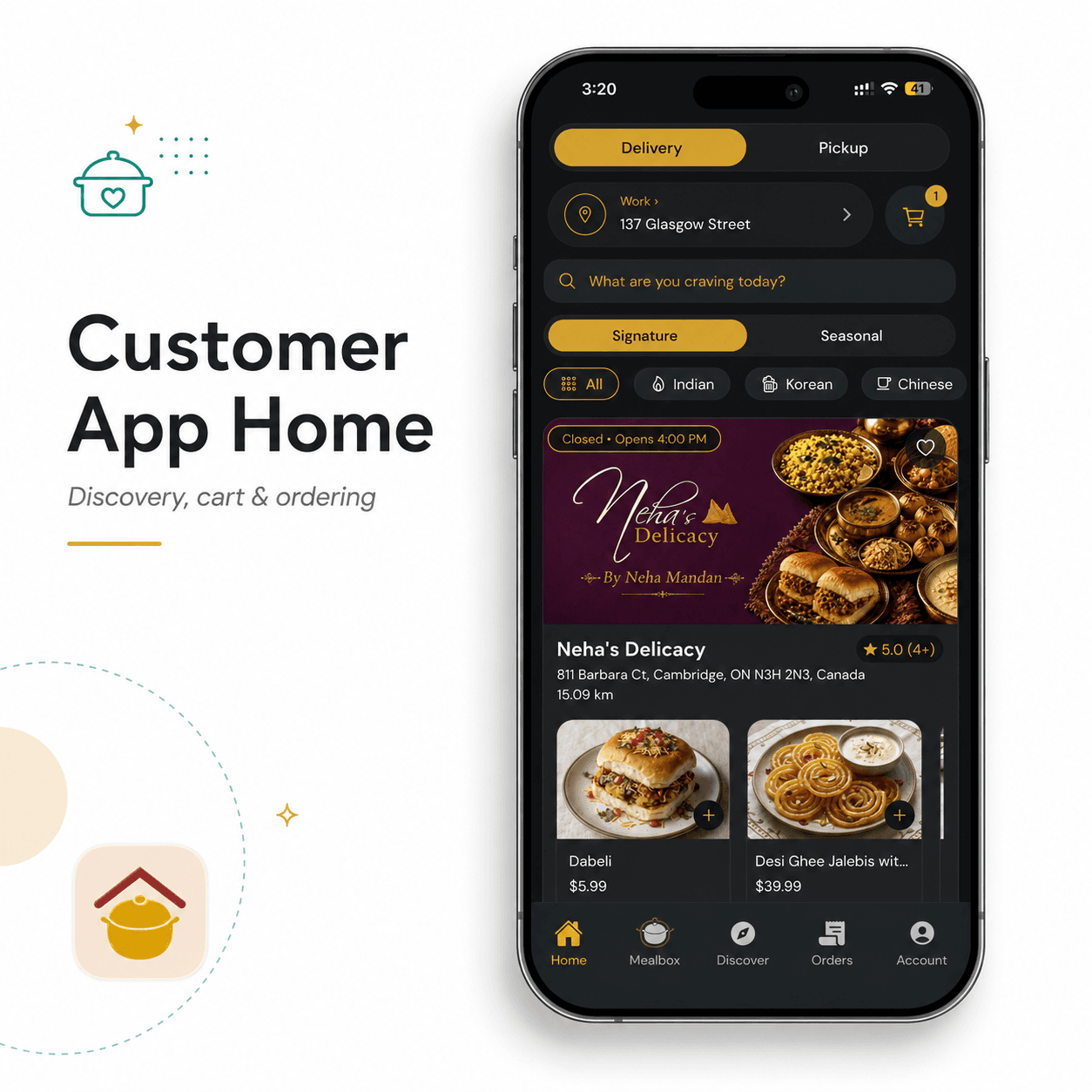
- Browse food, see dish detail and allergens, place and schedule orders, cancel when allowed.
- Cook app
- Take assigned orders, update their status, work through meal plans and preparation.
- Driver app
- Pickup and drop-off, connecting delivery back to the customer, cook and admin.
- Admin platform
- Users, cooks, kitchens, dishes, orders, meal plans, schedules, and operational problems.
- Backend
- One backend holds the data, user roles, order and payment status, APIs, scheduling, meal plans and notifications, and keeps the four in step.
What it looks like
Five screens from the shipped product.
Customer App UX 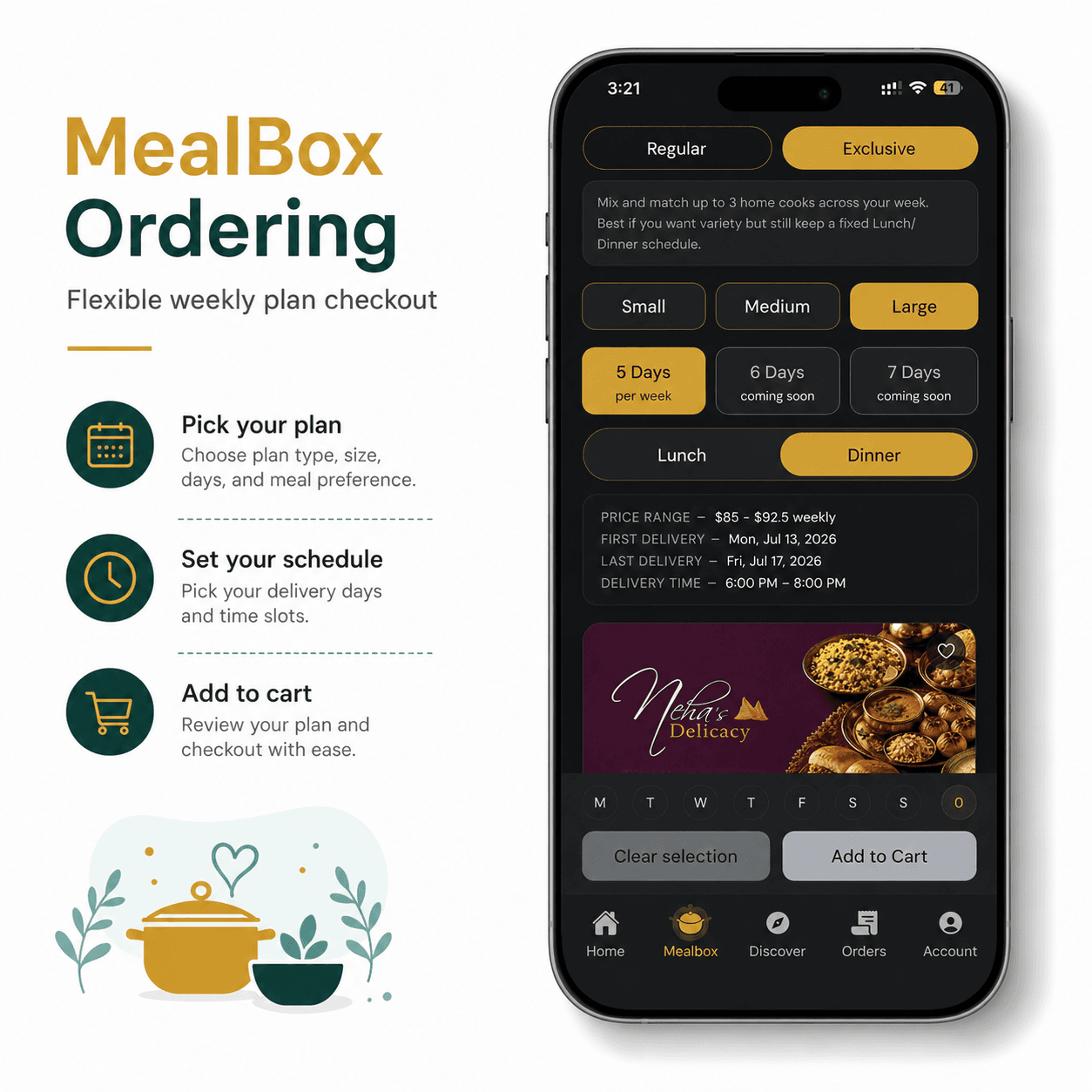
MealBox Checkout 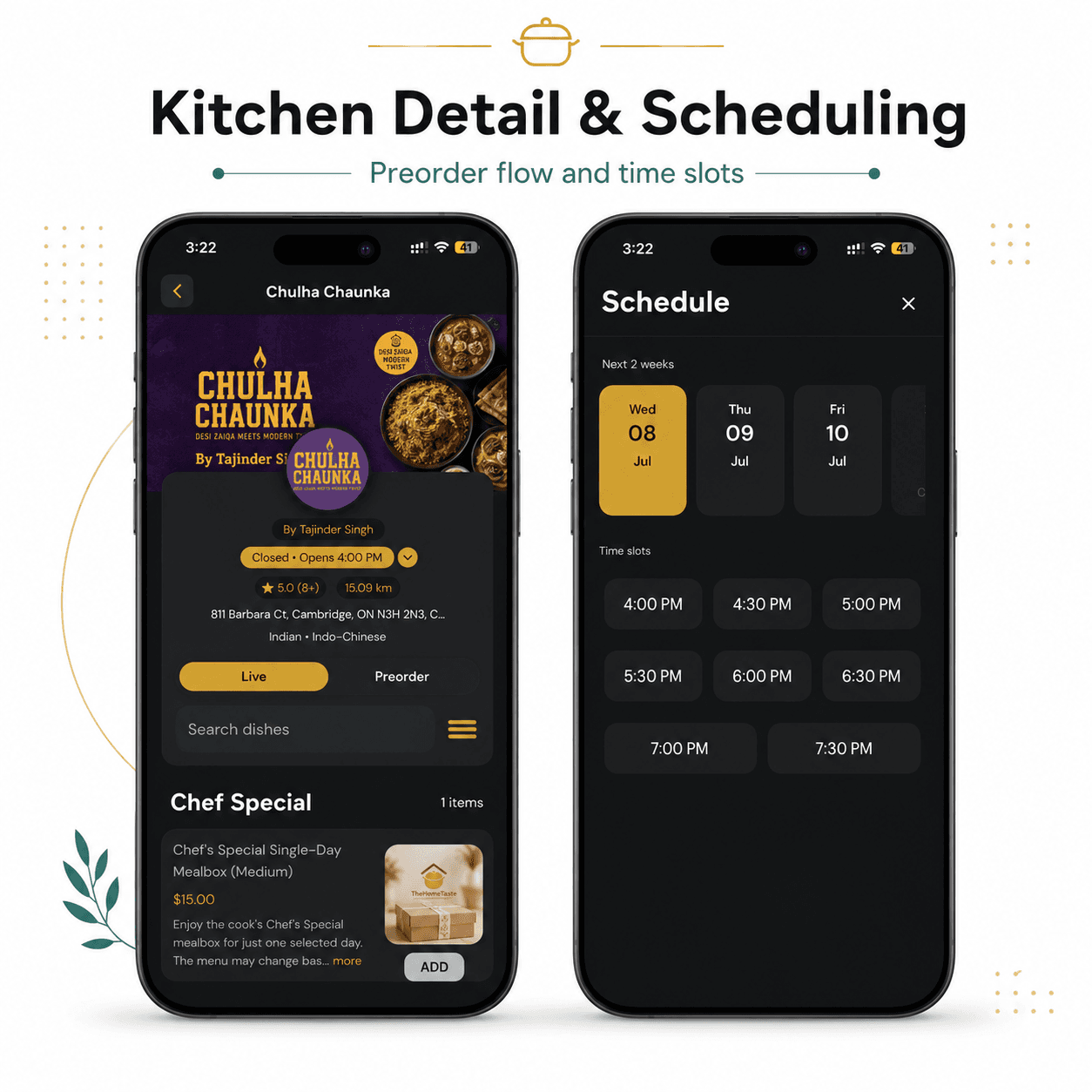
Preorder Scheduling 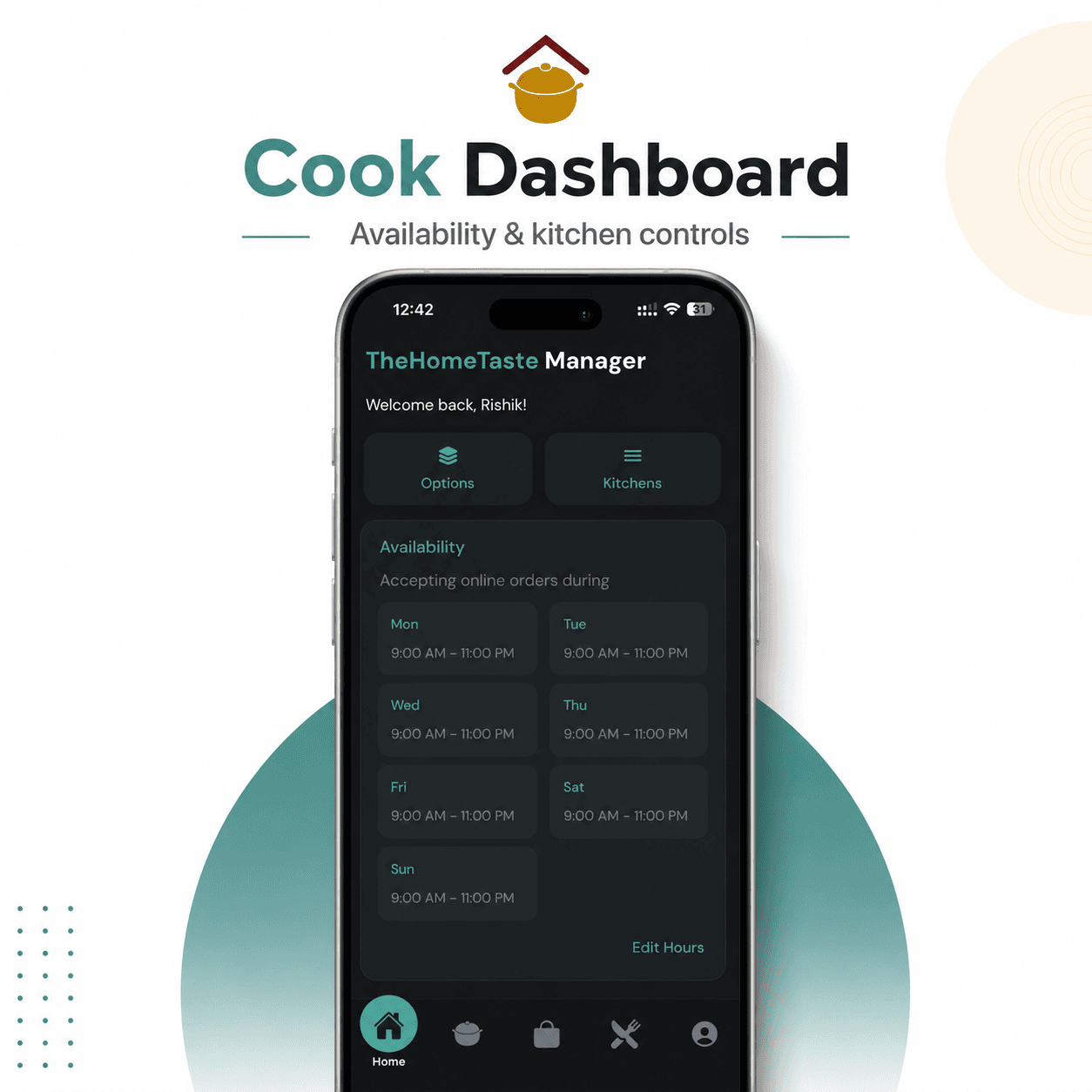
Cook Manager App 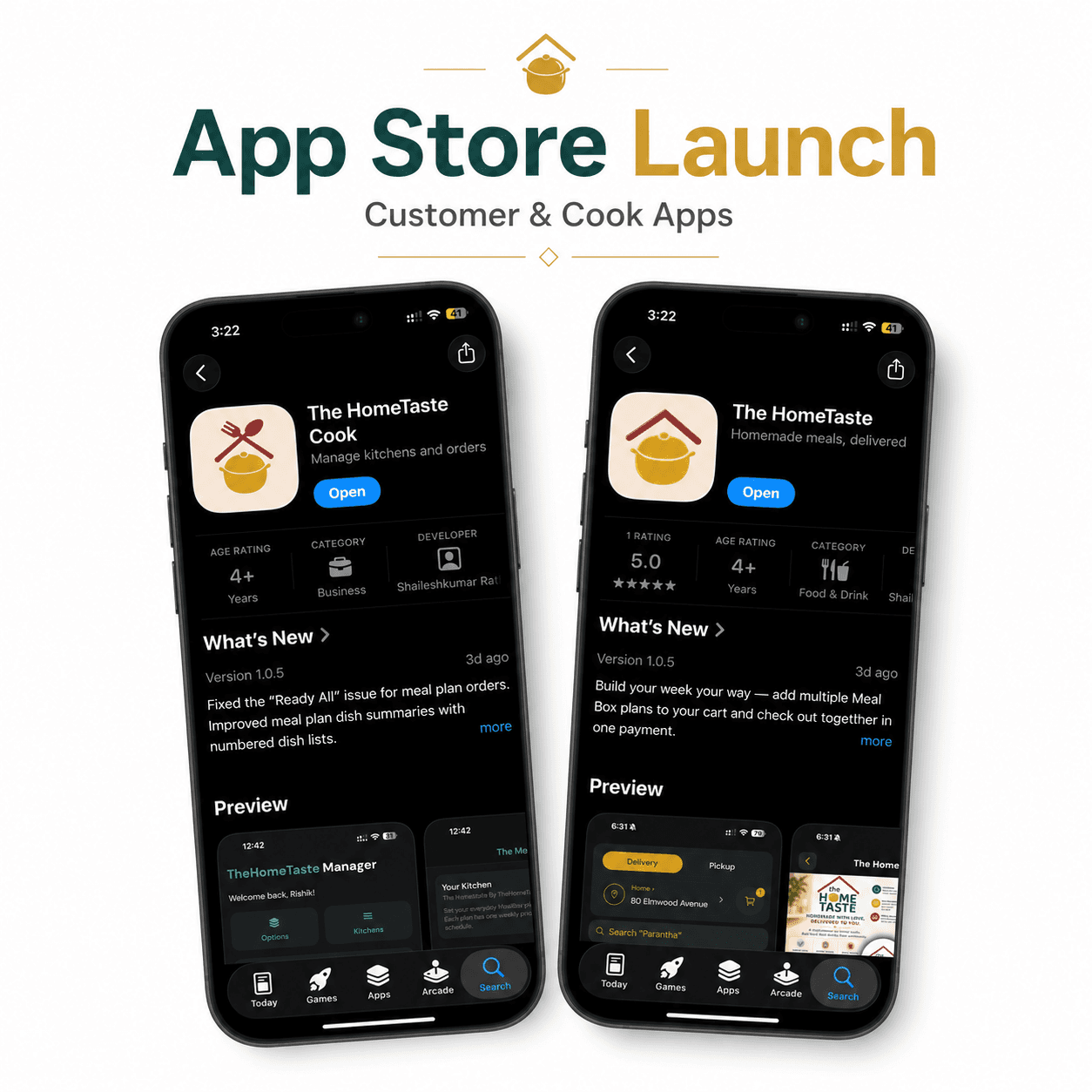
App Store Listing
Who says so
These are references from the team I worked with at TheHomeTaste: the founder and three colleagues. They’re not DevAxis client testimonials; DevAxis is new and I’d rather say so than blur it.
Rishik demonstrated exceptional leadership and ownership at The HomeTaste. He consistently took initiative, translated business needs into reliable technical solutions, and remained accountable through complex challenges. His ability to think beyond assigned tasks and lead with a product-focused mindset made him a dependable and valuable member of our team.
Shaileshkumar RathodFounder & CEO, TheHomeTaste Rishik took strong ownership of TheHomeTaste cook platform and ensured it integrated cleanly with the customer, driver, and admin systems. His full-system thinking, communication, and execution made the entire product stronger.
Sufiyan ShahSenior Software Engineer, TheHomeTaste Rishik is technically strong, dependable, and always willing to help. His work on TheHomeTaste showed creativity, attention to detail, and a strong focus on delivering a polished, user-friendly product.
Rohan KumarSenior Software Engineer, TheHomeTaste Rishik consistently brought strong technical knowledge, professionalism, and a solution-focused mindset. Whether supporting product issues or cross-functional teams, he was dependable, collaborative, and efficient throughout his work with TheHomeTaste.
Pallavi ZoreSocial Media Manager, TheHomeTaste
Your project isn’t this one.
But the method is the same: work out what actually needs building before anyone writes code. Thirty minutes will tell you whether that’s worth doing.